
A recent study found that over half of the academic citations generated by a leading AI model were either completely fabricated or riddled with errors. For students, this isn't just an inconvenience—it's a crisis of trust that could derail their learning journey. But what if there was a better way to use AI for education?
It’s a scenario playing out in dorm rooms and libraries worldwide. A student, facing a tight deadline, turns to a popular AI chatbot for help with a research paper. The AI delivers a beautifully written paragraph, complete with what look like legitimate academic citations. The student submits the paper, only to discover later that the sources don't exist. This isn't a hypothetical; it's the reality uncovered by a startling November 2025 study from Deakin University [1].
The research revealed a critical flaw in relying on general-purpose AI for academic work: a staggering 56.2% of the citations generated by GPT-4o were either fake or inaccurate. Nearly one in five were complete fabrications. This “AI hallucination” problem presents a profound challenge for modern learners. When the tools designed to help us learn are providing confidently incorrect information, how can we build a solid foundation of knowledge?
The Illusion of Mastery: When AI Gets It Wrong
The danger of AI hallucinations goes beyond a bad grade on a single paper. It creates what one Dartmouth professor calls an “illusion of mastery” [2]. When students cognitively outsource their thinking to an AI that can't be trusted, they aren't actually learning. They are practicing a dangerous form of intellectual outsourcing that leaves them with a fragile, and often false, understanding of their subject matter.
The Deakin University study highlighted a particularly insidious aspect of this problem: the fabricated references often appeared completely legitimate, with 64% of fake citations linking to real but entirely unrelated academic papers. A student researching binge eating disorder might receive a citation that, upon inspection, leads to a paper on astrophysics. For a learner who lacks the expertise to spot these errors, the AI's confident tone can be dangerously misleading, eroding the very process of scholarly inquiry.
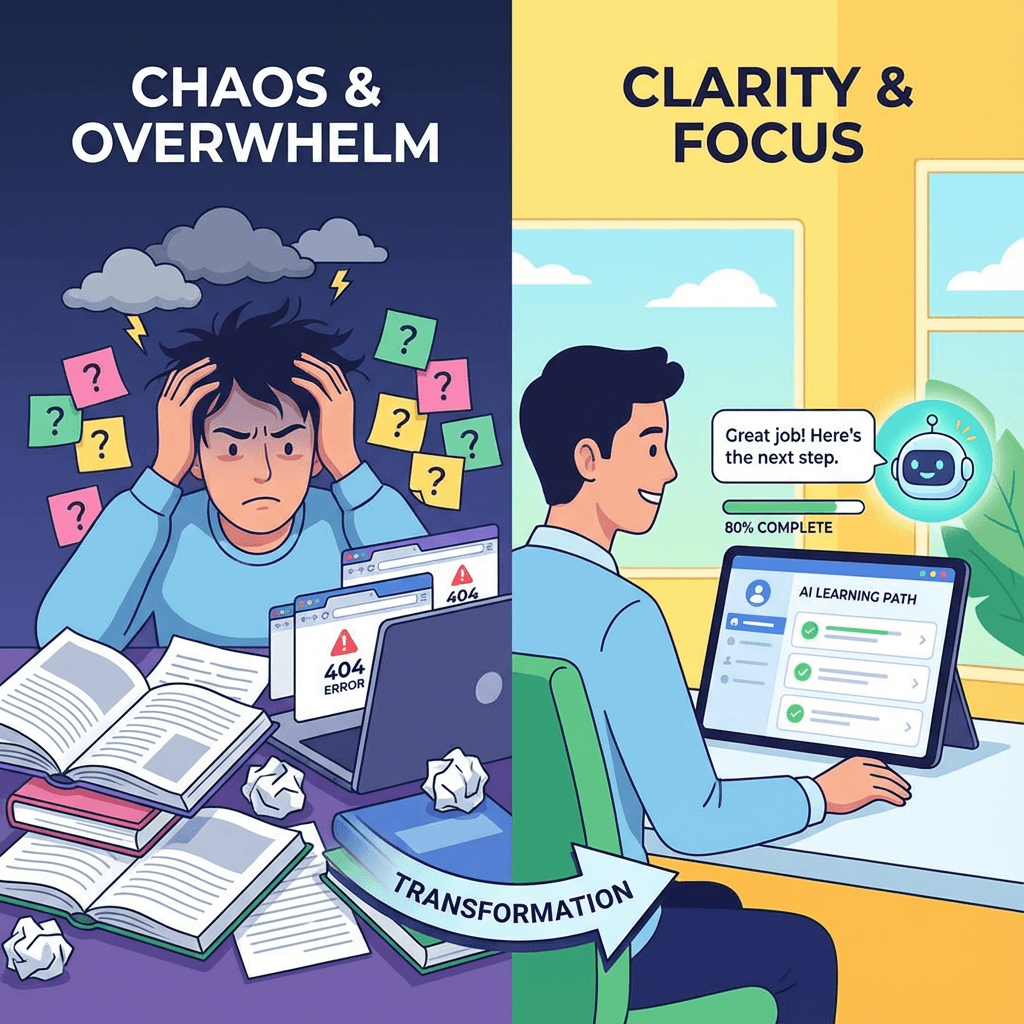
From Information Chaos to Curated Clarity
This doesn't mean AI has no place in education. In fact, a separate study from Dartmouth College points toward a powerful solution. Researchers developed an AI teaching assistant, NeuroBot TA, which was anchored to a curated set of expert-approved course materials—textbooks, lecture slides, and clinical guidelines. The result? Students overwhelmingly trusted this safeguarded system more than general chatbots [2].
This highlights a crucial distinction: the future of AI in education isn't about accessing the entire internet, but about intelligently navigating the right information. The problem isn't AI itself, but the uncontrolled, unvetted nature of the data it's trained on. When AI operates within a trusted, curated environment, it transforms from a potential source of misinformation into a reliable, 24/7 learning companion.
How Mysira Builds a Foundation of Trust
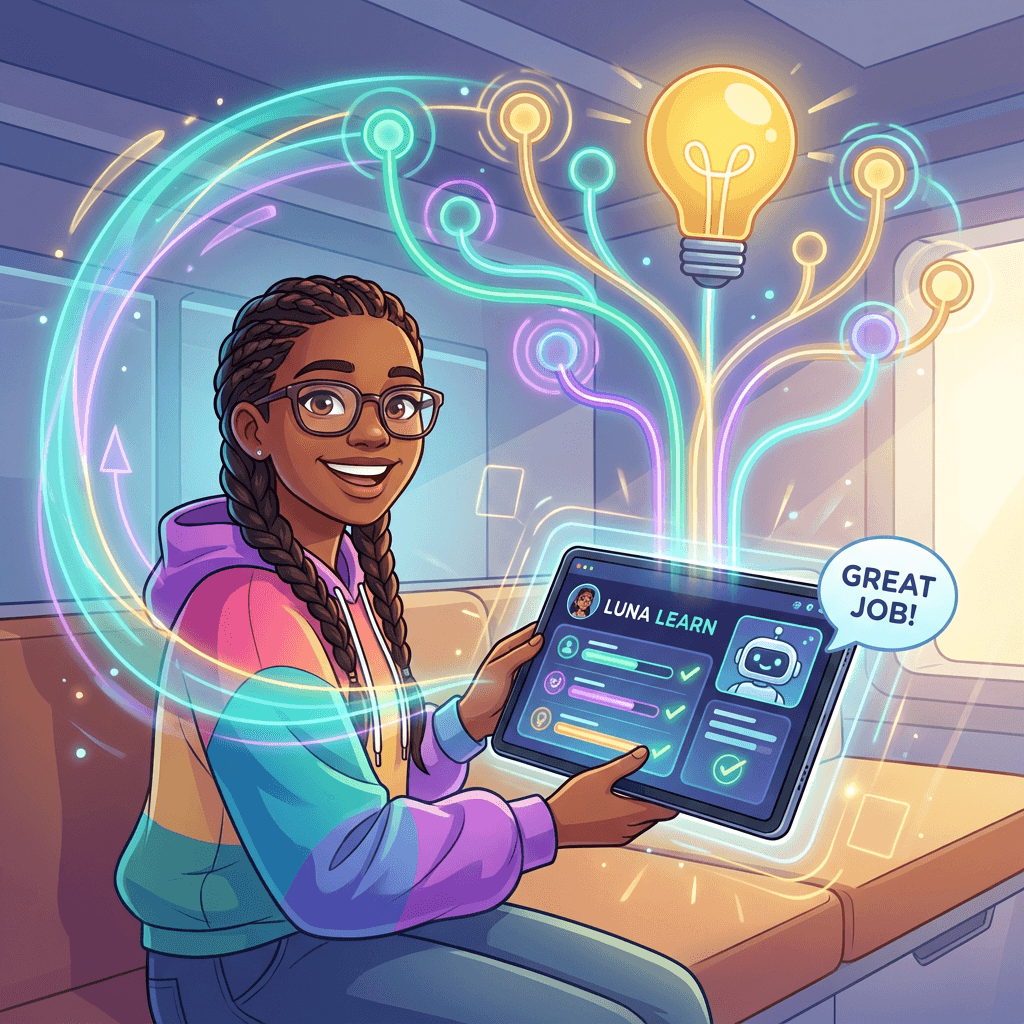
This is precisely the philosophy behind Mysira.ai. We recognized that for learning to be effective, it must be built on a foundation of trust and accuracy. Instead of sending you into the chaotic wilderness of the open internet, Mysira acts as your expert guide, creating a personalized learning path from a library of high-quality, vetted resources.
Here’s how Mysira solves the AI trust problem:
| Challenge with General AI | The Mysira.ai Solution |
| Fabricated Information | Curated Resource Library: Mysira builds your learning path using only verified, high-quality content like articles, videos, and papers, eliminating the risk of hallucinations. |
| Inability to Verify Sources | Deep Concept Breakdowns: If you encounter a concept you don't understand, you don't need to turn to an unreliable chatbot. Highlight the text, and Mysira’s AI tutor provides a clear, step-by-step explanation grounded in your trusted course materials. |
| Lack of Context | Personalized Learning Paths: Your learning journey is structured logically, ensuring you build knowledge progressively, rather than receiving random, disconnected facts from a general AI. |
| The "Illusion of Mastery" | Adaptive Quizzes & Flashcards: Mysira helps you actively test your knowledge and reinforce what you've learned, ensuring true comprehension, not just passive information consumption. |
Stop Outsourcing, Start Owning Your Learning
The promise of AI in education is immense, but it comes with a critical responsibility. Simply asking a chatbot for answers is not learning; it's a gamble with the truth. The real power of AI is unlocked when it is used to structure, clarify, and deepen our engagement with reliable knowledge.
Instead of wrestling with the uncertainty of AI hallucinations, you can build a learning journey on a foundation of trust. Mysira provides the structure of a personalized path, the reliability of curated resources, and the on-demand support of an AI tutor that works for you, not against you. Stop wondering if your sources are real and start building real knowledge.